Crownsville, MD — Anne Arundel County
Crownsville Chimney Sweep & Inspection
Crownsville’s inland location means less salt-air exposure than waterfront communities—but its 1970s–90s housing stock still contains aging clay tile liners, original throat dampers, and crowns well past their service life. MHIC-licensed chimney service for Crownsville and central Anne Arundel County.
Crownsville Chimney Profile
Crownsville’s Chimney Stock: What We Find on Inspection
Crownsville developed largely in the 1970s and 1980s, with some earlier farmhouse-era homes scattered through the area. Most homes were built with site-built masonry chimneys, and many with the gas insert or wood stove additions that were popular through the 1980s. Crownsville’s location—inland but with significant tree canopy—means chimneys stay shaded and damp longer than sun-exposed coastal counterparts, and animal intrusion (birds, squirrels, raccoons) is a persistent issue for uncapped flues.
🏠 1970s–80s Era
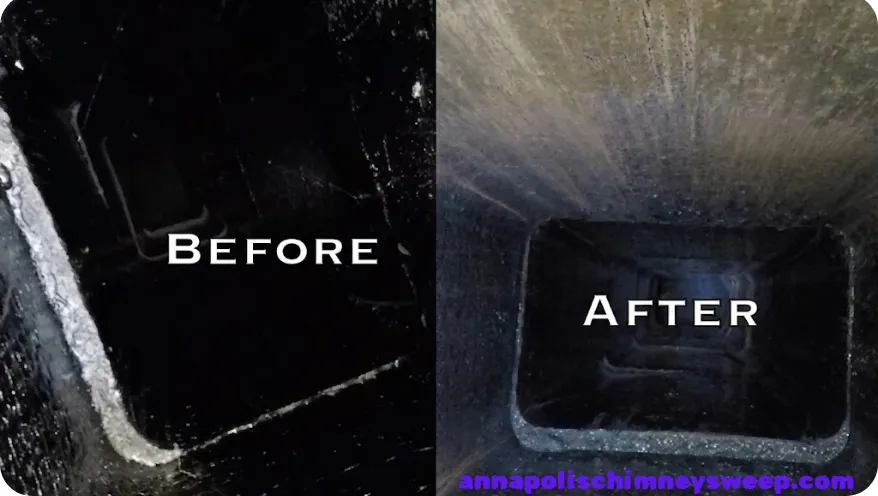
This era’s clay tile liners are now 40–50 years old. Thermal cycling, occasional heavy use, and the humidity from dense tree canopy all contribute to cracking. A video inspection reveals what a visual check cannot.
🌲 Tree Canopy Effects
Dense trees keep chimneys shaded and damp—accelerating moss and lichen growth on brick, slowing crown drying, and keeping mortar joints wetter longer. Blocked flues from tree debris are also common in Crownsville.
🐾 Animal Intrusion
Crownsville’s wooded setting means high squirrel and raccoon populations. An uncapped flue is a prime denning site. Cap installation is one of the most cost-effective services for Crownsville homes that have never had one.
Services
Chimney Services for Crownsville Homeowners
Annual Sweep & Inspection
Cleaning and NFPA 211 Level 1 inspection for maintained systems. For homes that haven’t had a formal inspection in several years, Level 2 with video inspection is the appropriate starting point—especially for 1970s–80s homes with original liners.
Cap Installation
304 stainless steel caps for Crownsville’s inland environment. Galvanized steel is adequate here but stainless extends cap life by 2–3x. A top-mount damper upgrade provides both animal exclusion and full flue sealing—a meaningful efficiency improvement.
Crown Repair & Coating
Concrete crowns in Crownsville’s shaded, wet environment tend to accumulate moss and lichen that retain moisture and accelerate freeze-thaw cracking. Elastomeric crown sealant extends crown life; structural replacement required for crowns with through-cracks.
Liner Replacement
Stainless steel flexible relining for cracked tile liner systems. Essential for any gas insert conversion and recommended when video inspection reveals significant cracking. The liner can typically be installed without modifying the exterior masonry.
⚠️ MHIC Requirement for Crownsville
- All repair and installation work requires an MHIC license — verify at mhic.maryland.gov
- For gas appliances or inserts: gas fitting license is required in addition to MHIC
- Get the inspection report before the repair scope — not after
- For homes not inspected in 5+ years: request Level 2 with video, not just a visual Level 1
- Ask about flue debris (leaves, animal nesting) before first fire of the season
FAQs
Crownsville Chimney FAQs
Is a chimney inspection necessary if I rarely use my fireplace?
Yes. Liner cracks, crown deterioration, and animal intrusion occur from thermal cycling and weathering regardless of how often the fireplace is used. A chimney that hasn’t been used in several years may actually have more deferred maintenance than one swept annually. Before re-starting use after a dormant period, an inspection is essential—blocked flues and animal debris are fire and CO hazards.
How does tree canopy affect my Crownsville chimney?
Trees shade the chimney, keeping brick and mortar damp longer after rain. Moss and lichen growth is common on north-facing or heavily shaded brick. This moisture retention accelerates mortar deterioration and freeze-thaw spalling. Trees also drop leaves and seed pods into uncapped flues and debris on crowns. Annual cleaning and periodic waterproofing treatment are both more important for shaded chimneys.
What’s the most cost-effective chimney upgrade for a Crownsville home?
If the chimney doesn’t have a stainless steel cap, that’s the single best-value upgrade—$200–$450 installed, permanent protection from water and animals. If the damper is original to the home, a top-mount damper upgrade delivers both cap function and meaningful heat retention improvement for $300–$500. Both are less expensive than the damage repair they prevent.
Crownsville Chimney Service
We connect Crownsville homeowners with MHIC-licensed chimney professionals for inspections, sweeping, and all chimney repairs.
Schedule in Crownsville →Services available in Crownsville: Chimney cleaning · Level 1 & 2 inspections · Masonry repair · Flashing replacement · Cap installation · Liner installation
Nearby areas we also cover: Millersville and Crofton